Leadership methods have become a lot more efficient, reflecting the principles that humans have always applied. The qualities to lead are associated with the individual, social, and national well-being. But what about the philosophical reflections?
Leaders with their comprehensive policy play a vital role in improving the living conditions, sense of security, and modern outlook of the nation. Indeed, it preserves or enhances society’s well-being that leads people to beat a path to its door.
They are the masters who transform their vision into reality. What strikes the leader is their superiority in judgment regarding their rational thinking. The challenges one faces might serve to brainstorm the intrinsic value of leadership.
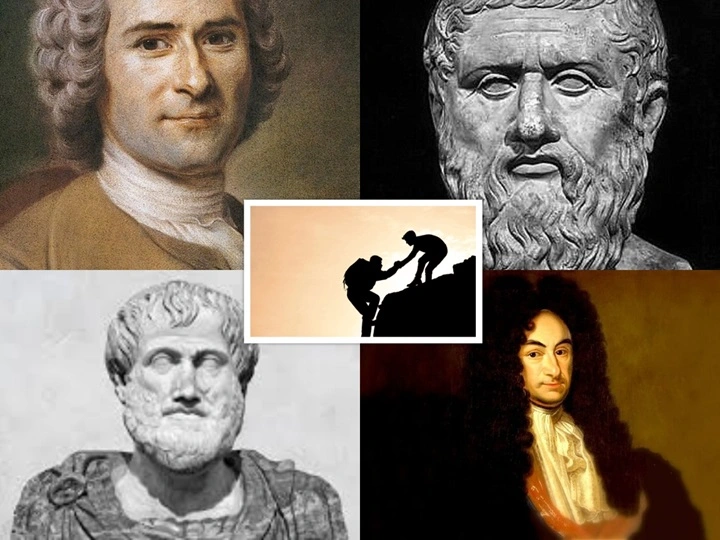
Here are some of the notable examples of philosophers with their reflection towards the leadership methods.
‘Philosopher-Kings’ As Plato’s Ideal Rulers
In his dialogue Republic, Plato proposes that philosophers who are lovers of wisdom should govern the state. His ideal rulers are the philosopher-kings. But the idea of his life as a philosopher-king brings several questions further. First, the political power, which might be in a tumultuous state due to excessive freedom, consists of selfish people who are driven by their personal desire to attain power and rule the kingdom.
Indeed, if the world is led by the philosophers, truth-seeking, wisdom, and courage in the vision of the leader will form a perfectly adequate idea that undoubtedly brings justice to the people, ending the tyranny of rulers who are motivated by their self-interest. Hence, a true leader who is capable of leading the entire people would be born in the world.
Through Plato’s reflections, his leadership behavior of building trust, making one realize his abilities and goals, can be one of the fundamental characteristics of good leadership.
Working as a team with receiving support from others helps to gain trust, and it’s one of the strength having responsibility on your side. Whether it is a work environment, families, or educational institutions, without compliance, a leader cannot be effective.
Leibniz’s ‘Philosophical Writing’ Teaches Us About Leadership
Gottfried Wilhelm Leibniz on book Philosophical Writing, taught us to some extent about leadership. His 1973 text New System, and Explanation of the New System (Philosophical Writings), published in Everyman’s Library, provides the example of two clocks suspended from the same piece of wood, which are in perfect agreement due to three ways: natural influence, supervision of a skilled craftsman, and third, the construction of clocks that are aligned accurately.
Leibniz’s aforementioned example taught us a perfect way of describing what a true leader is and what his/her qualities are. Without gaining natural influence, it’s unlikely to carry leadership. It’s the fact that a leader without supervision is a pirate without a desire to hunt the treasure, and the inaccurate headship is like digging a grave of yourself.
For a leader to influence others, the core ideas, values, and principles are the things that make a figure worth remembering. The flexibility to adapt according to the situation is needed for personal growth and development.
Rousseau Teaches Us About Strength And Qualities of a Leader
Leadership didn’t happen overnight. Jean-Jacques Rousseau highlights in his 1972 book The Social Contract that authority comes from people who agreed to the maxim of civil rights in terms of natural inequality.
His solution was the social contract, which is one of the foundations of the political order. And it’s the fact that political authority is the backbone of leadership. Rousseau describes:
“Each of us puts his person and all his power in common under the supreme direction of the general will, and, in our corporate capacity, we receive each member as an indivisible part of the whole.”
Therefore, in terms of Rousseau’s vision, his authority highlights his notion to drive the country, its citizens, and economy to the symbol of excellence. The strengths and qualities of the leader are Communication, Integrity, Accountability, Empathy, Humility, Resilience, Vision, Influence, Positivity, Delegation, and Confidence. This establishment is the root of the foundation that shapes the effective quality of a leader.
Motivating others to push forward in times of distress is one of the key strengths of good leadership. In fact, self-centered leadership is one of the entities which is an example of terrible leadership.
The critical leadership strengths include self and situational awareness, effective communication and negotiation skills, as well as conflict management and collaboration skills.
Effective communication is always key when it comes to leadership. It is a way of problem-solving, and integrity adheres to your moral ethics, which is an effective leadership attitude.