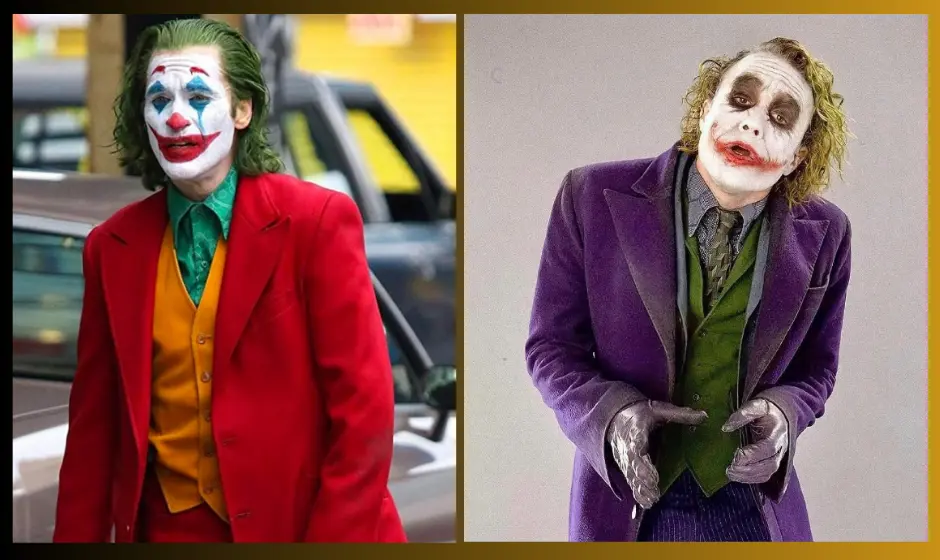
Joaquin Phoenix’s portrayal of Arthur Fleck, also known as the Joker, in the 2019 movie named after the iconic DC villain, is one of the most disturbingly realistic versions of the character ever put on screen. American filmmaker Todd Phillips wanted to make a Joker origin story that was not inspired by comic books, and he did so with near perfection.
Unfortunately, the movie went so far as to not copy the source that it nearly destroyed one of DC’s earlier projects, Christopher Nolan’s Dark Knight trilogy. By reimagining Gotham as a city beyond redemption, Joker challenged the philosophical foundation of Nolan’s Batman universe.
Nolan Showed A Broken But Optimistic Gotham
The Dark Knight trilogy (2005-2012) focused on the central theme of optimism, despite all the pain and sorrow throughout. Through multiple scenes, the franchise showed that the people of Gotham had not turned evil, and they were not beyond saving.
Batman Begins (2005)
Nolan uses Joe Chill –the killer of Thomas and Martha Wayne– to argue that crime is often born from desperation, not inherent evil, a belief Joker (2019) outright rejects. Joe later becomes a responsible citizen and even helps the authorities by agreeing to testify against crime lord Carmine Falcone.
Although Joe is killed in the courthouse by a hitman hired by Falcone, his death becomes a redeeming moment for Bruce Wayne.
The Dark Knight (2008)
The Joker hijacks two boats: one filled with civilians and the other with prisoners. He laces the ferries with bombs and sends the trigger of each bomb to the other boat. The Joker then orders the people to pull the trigger and threatens to blow both if they don’t do it voluntarily within his deadline.
The Joker intends to prove that everybody has a killer hidden inside themselves. And, given enough time, even an innocent person can turn into a cold-blooded killer without hesitation. But Joker’s theory is proven wrong when none of the boats pulls the trigger. This moment defines Nolan’s Gotham: flawed, frightened, but ultimately unwilling to surrender its humanity.
The Dark Knight Rises (2012)
GCPD Deputy Commissioner Peter Foley (played by Matthew Modine) eventually gives up his pessimism and sacrifices himself to save the city.
Batman’s character is also full of optimism; he returns to Gotham despite being emotionally scarred after witnessing his parents’ murder, saves the city numerous times, and also takes the blame for Harvey Dent’s murder, all in hopes of a better future for Gotham. He even forgives and trusts Selina Kyle after she betrays him for Ben.
More Superhero Content: ‘The Boys’ Season 5: Cast And Characters
Joker 2019 Doesn’t Have Much Room For Optimism
Unlike Nolan’s version of the city, Joker didn’t depict any form of positivity either in Arthur Fleck’s life or in the lives of the Gothamites. The rise of a non-negotiable Joker becomes imminent after all the humiliation, neglect, and abuse Arthur faces in his life.
After Thomas Wayne tells Arthur about his mother’s history at the Arkham State Hospital, he steals her records and discovers that his mother, Penny Fleck, is delusional. The files reveal that Penny stood by when one of her ex-boyfriends physically abused Arthur multiple times as a child. He was eventually found tied to a radiator, bruised, and injured in the head, which led to Penny’s arrest and admittance to Arkham. The shocking revelations about his mother trigger Arthur’s full transformation into Joker.
At the same time, the citizens of Gotham are initially frustrated with the system and are on the verge of turning against it. They start idealizing Joker after he kills three people on the subway. In one of the later scenes, the public becomes cult followers of the Joker and begins to riot in the city. They rescue the Joker from police custody and accept him as their leader.
Excessive Focus On Negativity
The film repeatedly portrays Gotham’s citizens as eager participants in violence rather than victims of circumstance. The residents don’t just want a way out of their problems; they also want to see the rich people dead. In a scene where Thomas Wayne is giving a speech about his candidacy for Mayor, people dressed in clown masks are seen holding “Kill the Rich” signs.
The man known for his kindness and loving nature, Thomas Wayne, is shown as an arrogant jerk in the movie. He talks down to the lower working-class people and indirectly threatens to cut off his charity housing project if the people don’t vote for him as the Mayor. Also, he punches Arthur, a clearly mentally ill person, who is misguided in believing that the head of the Wayne family is his father.
How Does The Contradiction Affect The Batman Franchise?
For a fan of Batman, every character – be it the villains, the Gotham Police Department, or the people of Gotham – is interesting. Everybody in the city has a unique story to tell, if explored deep enough.
Christopher Nolan understood the delicate relationship between the various elements and worked accordingly in his trilogy, creating an impaired but propitious Gotham. Nolan’s most intriguing move was to establish a realistic society in a superhero movie: A city plagued with crime, corruption, and injustice, but still hopeful for a better tomorrow.
Todd Phillips, on the other hand, envisioned a much more sinister Gotham where the people sing praises of murderers. As the movie was based on a villain, it’s expected to see a darker setting. But, making the whole city look like a bunch of savages seemed unrealistic. Philips likely intended to present a rebellion of the underprivileged against the controlling group, but the scenes felt more like acts of vandalism.
Also, apparently, it doesn’t take much to manipulate the Gothamites. Shouldn’t Joker use his mastermind to trick people into doing things for him, like creating havoc and chaos? Instead of people readily worshipping him for simply killing civilians: three nobodies at the subway, his own mother, and a TV show host.
All in all, Batman represents a symbol of hope to the public. But, in a city damaged beyond repair, the need for the existence of Batman becomes moot.
In Joker’s Gotham, there is no ferry test—and no one passes it. The city doesn’t resist chaos; it celebrates it. By making Joker a symbol of justified rebellion rather than moral failure, the film reframes Gotham as a place where Nolan’s hopeful conclusions feel almost impossible.
Everything In Joker Turns Out To Be A Lie
Luckily, the Batman franchise isn’t doomed just yet. As it turns out, at the end of the Joker, every moment of the film is just a story being told by the Joker to his psychiatrist.
We all know that the origin of the Joker is a mystery; the character himself has provided multiple theories to further add to the confusion.
Joker’s ending must have been a sigh of relief to most fans, as it saves the people of Gotham from turning into criminals. However, unless everyone grasped the ending of the movie, the concept of an irredeemable Gotham may still be prevalent in moviegoers’ minds.